
"Rio de Janeiro"
300 article(s) found

Introduction to the characteristics of Brazilian Coffee Flavor and Fruit Coffee beans
The Portuguese expedition established a colony in Pakistan in the 1630s. The Governor was appointed in 1549. The entire colony was then United along the Atlantic coast under Portuguese rule. The French invaded in 1555, occupied the equivalent of present-day Rio de Janeiro, and intended to set up a French colonial stronghold in South America. However, because the French were unable to attract colonists from Europe,

Flavor description of coffee beans in the state of Bahia, Brazil
The flavor description of coffee beans in the Brazilian state of Bahia is 31 kilometers away from the city of Rio de Janeiro and 1692 kilometers away from the Brazilian commercial town of Sao Paulo. [economy] Bahia is the state with the highest GDP in the northeastern states of Brazil, and its average economic growth rate has exceeded that of Brazil over the years, and it plays an important role in the political and economic fields of Brazil. The state and Pakistan

The international history of coffee industry introduces how the bubble of Brazilian coffee economy ended.
For professional baristas, please pay attention to the bubble economy caused by coffee in the coffee workshop (Wechat official account cafe_style) in Brazil at the beginning of the 20th century. Large-scale coffee production in Brazil began in the 19th century due to a price collapse due to mass production of coffee. Coffee is grown in Rio de Janeiro, Minas Gerais, S ã o Paulo and traded everywhere. Brazil became enslaved and cultivated

Brazil South Minas Coffee Flavor description Grinding scale treatment Variety producing area
Brazil South Minas Coffee Flavor description Grinding scale method Coffee varieties originated in Ethiopia, and the French got coffee seeds from Ethiopia and brought them to French Guiana in South America. In 1727, a French immigrant living in Brazil secretly brought the seed to Brazil, first planted in Rio de Janeiro and then gradually extended to Sao Paulo and Minasji.

Introduction to the flavor characteristics of Brazilian Kaduai and Kaddura coffee half-sun treatment Kaduai nuts are sweet
Professional coffee knowledge exchange more coffee bean information please follow the coffee workshop (Wechat official account cafe_style) [country] Brazil [variety] Mundo Novo Arabica derived species, Yellow Catuai Yellow Kaduai [treatment] Sun Barista Flavor Notes: clean and charming citrus and berry aromas; wet aromas with cocoa, drupes and milk

Which brand of Brazilian coffee tastes good? Why don't the top ten coffee brands in Brazil have Starbucks?
Professional coffee knowledge exchange more coffee bean information please follow the coffee workshop (Wechat official account cafe_style) market supermarkets taste good coffee Brazilian traditional markets and supermarkets are favorite sightseeing places for tourists. In Brazil's big cities such as Sao Paulo, Rio de Janeiro and Curitiba, traditional markets (Mercado)

Introduction to the treatment and grading of coffee beans in Brazil the taste and flavor characteristics of Huangbourne in Queen's Manor
When it comes to Brazilian coffee beans, many people don't seem to have much impression, but Brazil is actually a very important part of making espresso beans. Brazilian coffee is the largest coffee producer and the most complete coffee production base in the world. it is slightly bitter and smooth in the fragrance. He is not only the largest coffee producer, but also the second largest coffee consumer.

Brazilian Sanders Coffee and American Coffee, Brazilian Arabica Coffee and Robusta Coffee
Communication of professional baristas Please follow the coffee workshop (Wechat official account cafe_style) Brazil Coffee mentions the origin of coffee, the first thing that comes to mind is Brazil in South America, because it is the largest coffee producer in the world. There is a wide variety of Brazilian coffee, the vast majority of which are unwashed and sun-dried, classified according to the name of the state of origin and the port of transport. Brazil has 2.
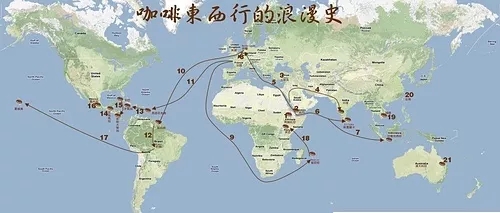
After reading the spread history of coffee, feel the romance of coffee traveling around the world.
Professional coffee knowledge exchange more coffee bean information Please pay attention to the coffee workshop (Wechat official account cafe_style) Coffee will become a world drink, is accompanied by the great navigation era of the 17th and 19th century, after three hundred years coffee beans, coffee seedlings planted all over the world, including the Netherlands, France brought coffee beans to colonization, newly developed regions of the Caribbean, Central and South America, the 19th century

Vanilla cream, cocoa, sweet aroma, heat, Brazilian carnival coffee, taste.
Professional barista communication, please pay attention to the coffee workshop (Weixin Official Accounts cafe_style ) after grinding rich vanilla cream, cocoa sweet smell. The cup of cocoa aroma is rich, after the mouth can feel a light apple grass, while the sweet butter cocoa taste full in the mouth, thick and not bitter, smooth fat throat, the end of the release of stone fruit aroma, high sweetness performance, sweet taste let thick

Which brand of Brazilian coffee is good? what's the difference between Brazilian coffee and American coffee?
Communication of professional baristas Please follow the coffee workshop (Wechat official account cafe_style) Brazil Coffee mentions the origin of coffee, the first thing that comes to mind is Brazil in South America, because it is the largest coffee producer in the world. There is a wide variety of Brazilian coffee, the vast majority of which are unwashed and sun-dried, classified according to the name of the state of origin and the port of transport. Brazil has 2.

The characteristic planting Environment of Coffee Bean in Queen's Manor in Mojiana, Brazil
The characteristics of coffee beans in the Queen's Manor in Mojiana, Brazil. The Portuguese expedition established a colony in Brazil in the 1630s. The Governor was appointed in 1549. The entire colony was then United along the Atlantic coast under Portuguese rule. The French invaded in 1555 and occupied the equivalent of present-day Rio de Janeiro, intending to set up a French colonial stronghold in South America.

The older and stronger the acidity, the flavor and taste of Brazilian coffee. Introduction to the characteristics of fine coffee in the manor area.
The Portuguese expedition established a colony in Pakistan in the 1630s. The Governor was appointed in 1549. The entire colony was then United along the Atlantic coast under Portuguese rule. The French invaded in 1555, occupied the equivalent of present-day Rio de Janeiro, and intended to set up a French colonial stronghold in South America. However, because the French were unable to attract colonists from Europe,

Introduction to the planting environment of coffee-producing areas in Honduras, which are mostly mountains and plateaus.
In the early 17th century, the Germans, French, Italians and Dutch all competed to sell coffee to their overseas colonies. In 1616, a coffee tree was transferred to the Netherlands via the port of Mocha, giving the Dutch the upper hand in the competition for coffee cultivation. In 1658, the Dutch began to grow coffee in Ceylon. In 1699, the first European plantations appeared in Java by the Dutch.

Introduction of high-quality coffee beans with the characteristics of Brazilian coffee flavor and taste varieties
The Portuguese expedition established a colony in Pakistan in the 1630s. The Governor was appointed in 1549. The entire colony was then United along the Atlantic coast under Portuguese rule. The French invaded in 1555, occupied the equivalent of present-day Rio de Janeiro, and intended to set up a French colonial stronghold in South America. However, because the French were unable to attract colonists from Europe,
Brazilian Santos
The name of Brazilian coffee: Brazil Santos 2 mentions Brazilian coffee, the most famous of which is Brazil Santos, which is called Brazil Bourbon Santos when raw coffee beans are Arabica bourbon. Santos is generally translated as Sandos and Santos in Chinese. Santos is located in the state of Sao Paulo, Brazil, a seaport city, from the state capital of Sao Paulo (Sao Pa)
The abnormal Prosperity of Brazilian Coffee
Coffee industry is both a driving force and a yoke coffee industry occupies a pivotal position in the economic structure of modern Brazil, providing the driving force for urbanization, industrialization and modernization. First, the large amount of export foreign exchange created by the coffee economy after independence provided the necessary financial guarantee for Brazil's early industrialization. In 18891919, the number of Brazilian industrial enterprises increased from 626 to 13566.

Introduction of mild and smooth Brazilian coffee boutique coffee bean flavor manor production area
The Portuguese expedition established a colony in Pakistan in the 1630s. The Governor was appointed in 1549. The entire colony was then United along the Atlantic coast under Portuguese rule. The French invaded in 1555, occupied the equivalent of present-day Rio de Janeiro, and intended to set up a French colonial stronghold in South America. However, because the French were unable to attract colonists from Europe,

Taste and flavor characteristics of Brazilian Sheraton coffee by hand brewing method record of baking of Brazilian Hilado coffee beans
For the exchange of professional baristas, please pay attention to the coffee workshop (Wechat official account cafe_style) Brazil-Syrador (1) Brazilian beans are usually used as mamba, or with mixed beans, this time they are roasted with mixed beans and are expected to be roasted in the middle. 190 degrees into beans. Control at 0800 time, temperature 161,

Introduction to the characteristics of the manor producing area of Brazilian boutique coffee with soft flavor
The Portuguese expedition established a colony in Pakistan in the 1630s. The Governor was appointed in 1549. The entire colony was then United along the Atlantic coast under Portuguese rule. The French invaded in 1555, occupied the equivalent of present-day Rio de Janeiro, and intended to set up a French colonial stronghold in South America. However, because the French were unable to attract colonists from Europe,